Tree Services
Arborist & Tree Care Services
Tree care is the part of the work that decides whether a tree is an asset in ten years or a liability. It covers assessment, structural pruning, deadwood removal and knowing when to leave a tree alone.
Arbor has been caring for South Florida trees since 1989. Mature oaks, black olives, mahoganies, gumbo limbo, royal and coconut palms all behave differently here, and the right cut on one is the wrong cut on another.
What tree care includes
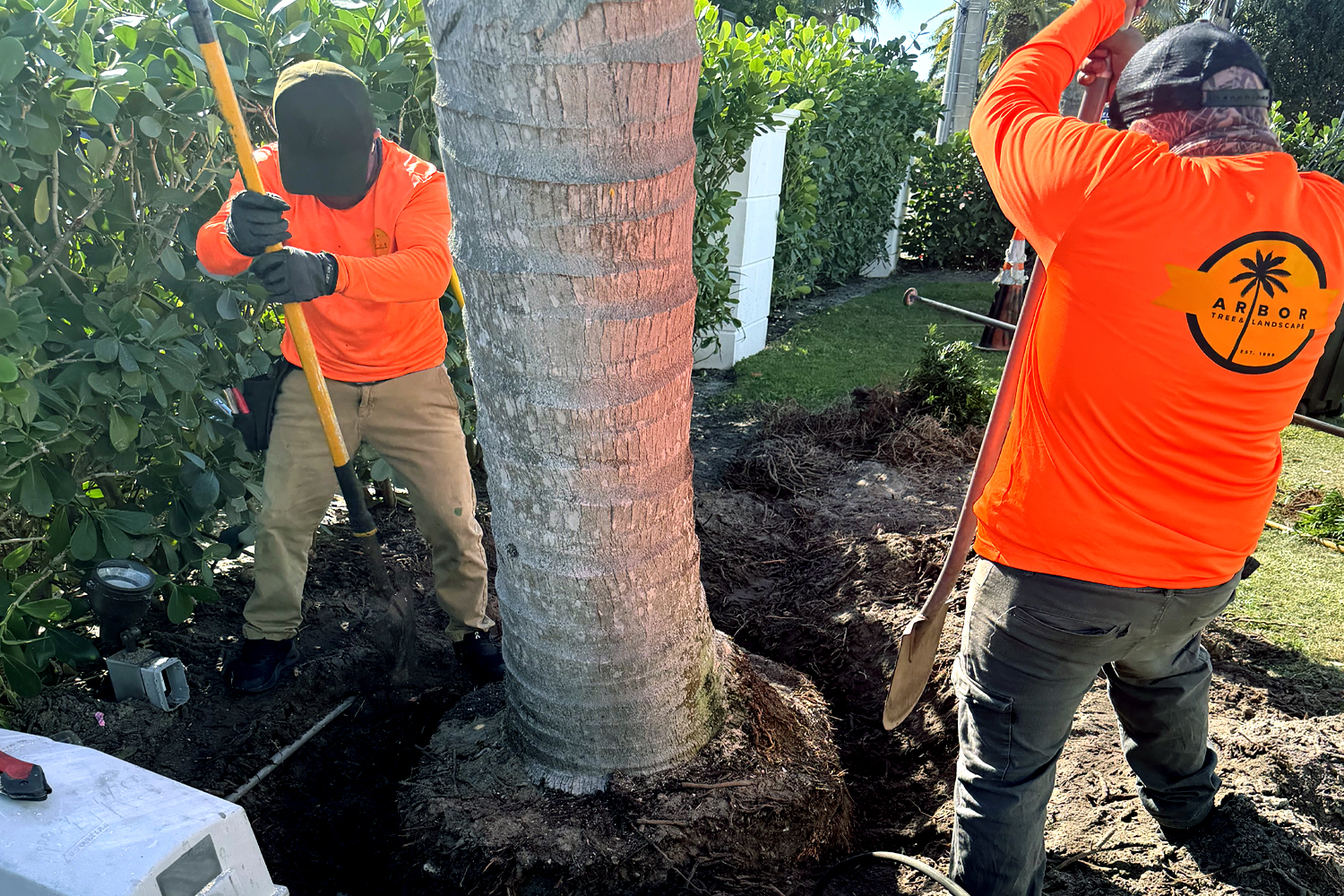
Not every visit needs all of this. What a tree gets depends on its species, age, condition and where it stands.
Tree health assessment
A look at canopy condition, defects, decay indicators and root zone problems, with a plain explanation of what we found.
Structural pruning
Correcting form on young and middle-aged trees so they build strong unions instead of competing leaders.
Deadwood and hazard reduction
Removing dead, cracked and hanging limbs, especially over drives, patios and walkways.
Storm preparation
Reducing end weight and thinning selectively so the canopy passes wind instead of catching it.
Root zone and clearance issues
Addressing roots against hardscape, soil compaction and conflicts with irrigation and utilities.
Long-term maintenance plans
A pruning cycle for the trees you intend to keep, so nothing gets away from you.
Our approach: assess first, cut second
We walk the property, note the trees that need attention now and the ones that only need watching, and then explain the options. If a tree needs nothing, we say so.
Where a tree is declining, we are honest about it. Repeated heavy cutting on a failing tree usually costs more than removing it and replanting something appropriate through our landscaping services.
Tree health questions
How do I know if a tree is unhealthy?
Common signals are thinning canopy at the top, leaves smaller or paler than the same species nearby, dead branch tips, mushrooms or soft wood at the base, cracks in a main union, and soil lifting on one side of the trunk. Any of those is worth having looked at rather than waiting.
What does an arborist actually look at?
The whole tree and its site: species and expected form, root zone and soil conditions, trunk and union defects, deadwood, previous cuts, canopy density, clearance issues and what is close enough to be damaged if part of the tree fails.
Can a leaning tree be saved?
Sometimes. A tree that has grown at an angle over years is different from one that shifted in a storm. If the root plate has moved or soil is heaving, that is urgent. If the lean is old and stable, reduction and end-weight removal may be enough.
Do you provide ongoing care rather than one visit?
Yes. For properties with mature or specimen trees, planned pruning on a cycle is usually cheaper and produces better trees than reacting to problems.
Related services
- Tree trimming
Routine clearance and shaping work.
- Canopy reduction
Bringing an oversized tree back in scale.
- Tree relocation
Moving a healthy tree that's in the wrong place.
- Tree removal
When a tree can no longer be kept safely.
Arborist and tree care work is available across our service areas.